By Drew Cooper | Peninsula Plants Nursery: peninsulaplants.com.au

Planting native shade trees on the Mornington Peninsula is one of the most rewarding things a landowner can do. The region’s mix of sandy coastal soils, heavier clay in the hinterland, salt-laden winds and dry summers rewards species that evolved here, and the payoff is cooler gardens, thriving birdlife and a landscape that feels authentically Victorian.
Few trees say “Peninsula” like the coast manna gum, Eucalyptus viminalis subsp. pryoriana, which thrives in the sandy, nutrient-poor soils common across the region. It grows into a graceful, broad-crowned tree that offers generous shade and provides vital habitat for koalas and gliders. Its cousin, the swamp gum, Eucalyptus ovata, is a better choice for low-lying or occasionally wet properties, tolerating heavy soils that would sink other eucalypts. Both can grow tall, so they suit larger blocks rather than suburban backyards.
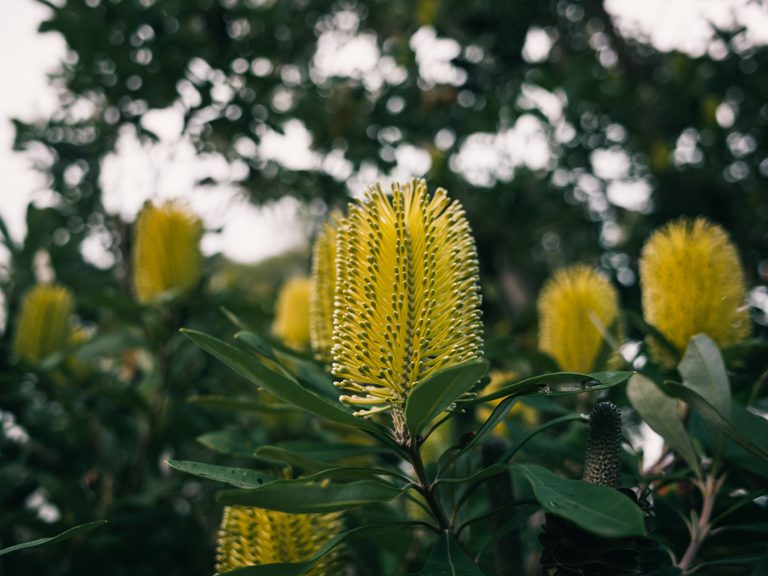
For something that handles the salty winds along the bayside and ocean-facing shores, coast banksia, Banksia integrifolia, is hard to beat. It forms a sturdy, dense tree with silvery-backed leaves and pale-yellow flower spikes that attract honeyeaters, wattlebirds and spine bills. Its tolerance of exposure means it can act as a windbreak while still casting decent shade beneath.
Similarly, the drooping she-oak, Allocasuarina verticillata, is a tough, slow-growing option well suited to dry, rocky or exposed sites. Its soft, weeping foliage creates a gentle dappled shade, and the cones are a favourite food of the endangered glossy black cockatoo in other parts of the state.


If you are working with a more modest space, the blackwood wattle, Acacia melanoxylon, offers fast growth and a handsome form, though it can be vigorous, so it pays to give it room. Silver banksia, Banksia marginata, is another smaller, adaptable choice, reaching a manageable height while feeding native bees and birds. For a really compact canopy, the tree violet and sweet bursaria, Bursaria spinosa, provides fragrant summer flowers, though its shade is more modest and its thorns suggest keeping it away from play areas.
Choosing locally indigenous species matters. Look for plants grown from seed collected on the Peninsula, which are adapted to the particular soils and microclimate and are far more likely to establish well. Local indigenous nurseries and community groups such as Landcare networks can point you toward the right species for your property and often sell tubestock at modest prices. Tubestock generally outperforms larger, advanced trees because young plants settle in faster and develop stronger root systems.
Planting is best done in autumn or winter, when the soil is moist and the plants have months to establish before summer heat arrives, though with a well-functioning irrigation system you can still plant up until the heat arrives mid-summer. Water deeply through the first couple of years, mulch generously to retain moisture and suppress weeds, and protect seedlings from rabbits and wallabies with tree guards. Avoid fertilising, as many natives, particularly banksias, dislike high phosphorus.
Think carefully about placement as well. Keep large eucalypts well clear of buildings, drains and powerlines, and remember that bushfire risk is a genuine consideration on much of the Peninsula, so check council guidelines on vegetation near homes.
With sensible selection and a little patience, your trees will reward you with shade, shelter and birdsong for generations.
Happy gardening!