By Amanda Connell

As nature bursts into bloom, the busy hum of bees brings colour and life back to the natural world. While some fear their sting, there’s no need for concern unless you are allergic. As pollinators, bees are crucial for food security, biodiversity, and a healthy, balanced ecosystem.
Australia has more than 2000 native bee species that are as diverse as our population, ranging widely in colour, size, and sociality. They can be black, yellow, red, metallic green, or even black with blue polka dots. The smallest is Cape York’s minuscule Quasihesma bee, measuring less than 2mm long. In contrast, the great carpenter bee reaches up to 24mm.
Whether fat and furry or shiny and sleek, bees share a deep symbiotic relationship with nature, shaped by thousands of years of adaptive evolution. Some species are so interconnected with their host plants that they emerge from their nests at the exact time of year the flowers open.
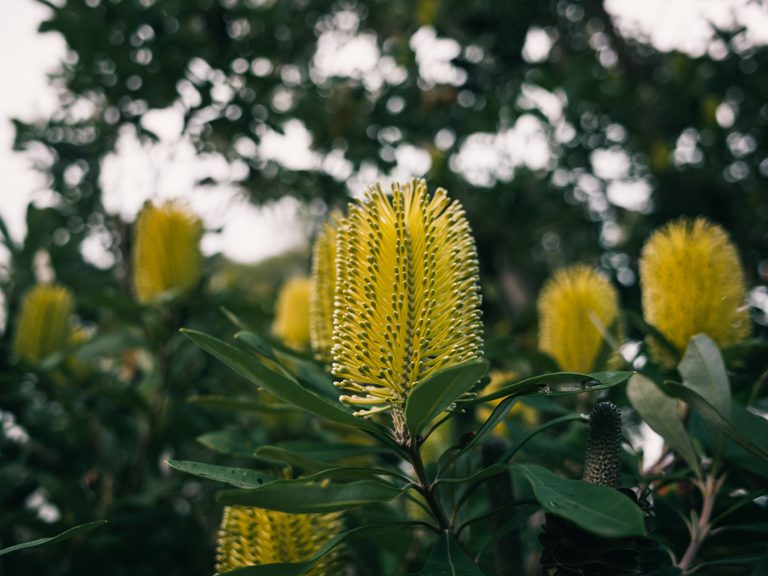
To maximise your garden’s fruit and vegetable yields, plant a diverse range of flowering species to attract these native pollinators. Different bee species have evolved highly specialised traits to access food. For example, some have incredibly long tongues – up to 20mm – allowing them to reach deep nectar reserves inside tubular flowers like nightshades, sage, lavender, and lemon balm. As these bees forage, they use a technique called buzz pollination, rapidly vibrating their flight muscles to release pollen that clings to their hairy bodies, effectively transferring from blossom to blossom.
Most Australian bees are solitary, raising their young in woody cavities or soil. While some species group their independent nests close together in communities, each female remains the ‘queen’ of her own cell. She gathers pollen and nectar into a single chamber, lays an egg on top, and seals the room to keep her offspring safe.
Only 11 native species, alongside the European honeybee, represent the 5-10 per cent of highly social bees living in organised colonies. These build large wax comb structures in tree branches, walls, or roofs. The latter can become problematic, as the females fiercely protect their large colonies.
To read more about hive life, follow @thenaturetype